
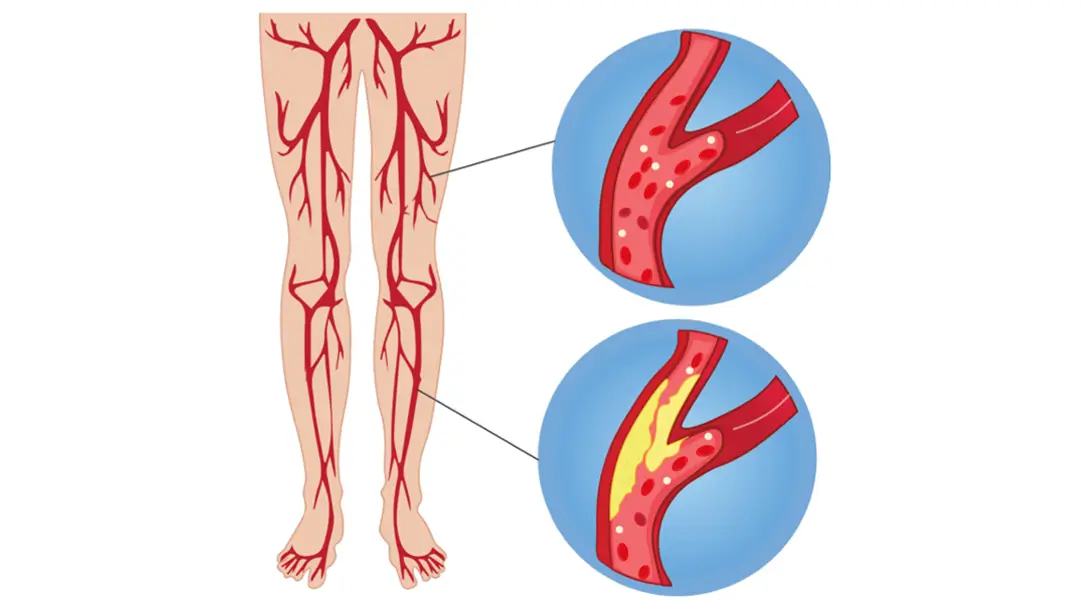
Peripheral Arterial Disease (PAD) is a chronic condition in which plaque builds up in the arteries of the legs. This typically occurs gradually, and if allowed to progress, the blood flow in the affected artery can become limited or completely blocked.
When you develop PAD, your extremities—usually your legs—don't receive enough blood flow to meet the body's demand during activity. This results in leg pain while walking, a symptom known as claudication.
Causes & Risk Factors:
- Atherosclerosis (plaque buildup in arteries)
- Smoking
- Diabetes
- High blood pressure
- High cholesterol
- Obesity
- Age
Symptoms:
- Pain or cramping in the legs while walking (claudication)
- Numbness or weakness in the legs
- Coldness in the lower leg or foot
- Toes Blackening
- Hair loss on the legs
- If progresses, pain in the feet
Treatment:
- Angioplasty and stenting to open narrowed vessels
- Bypass surgery to reroute blood flow
- Endarterectomy to remove plaque from arteries
- Amputation in severe cases
Lifestyle Modifications:
- Quit smoking
- Engage in regular physical activity
- Maintain a healthy diet and weight
- Manage diabetes and blood pressure
Medications:
- Cholesterol-lowering drugs
- Blood pressure medications
- Blood thinners to prevent clotting
- Symptom relief medications
Diagnosis:
- Ankle Brachial Index
- Doppler
- CT-Angio/MR Angiography (MRA)
- Digital Subtraction Angiography