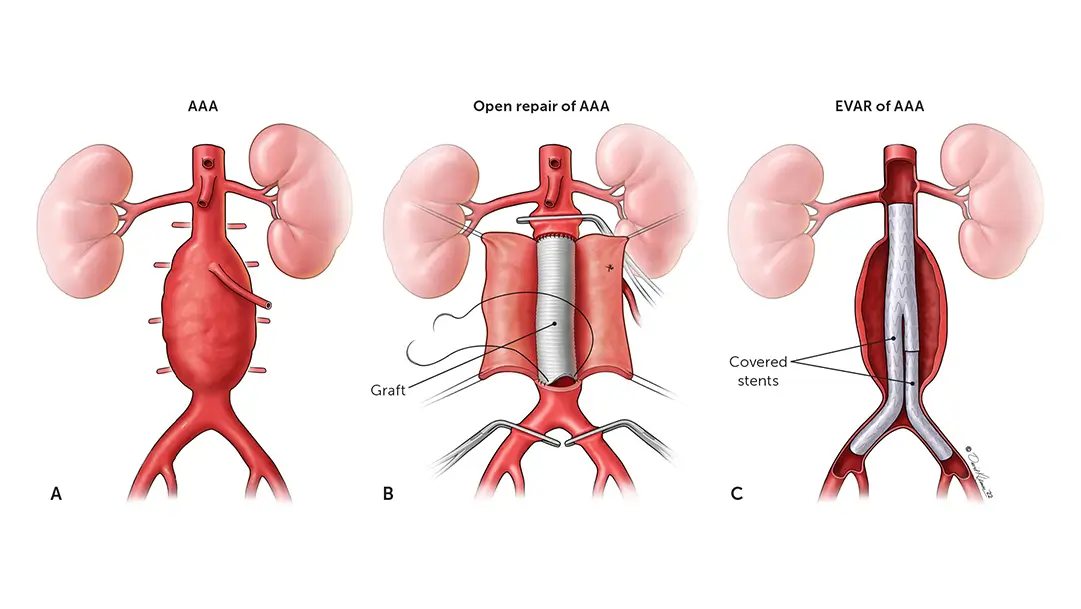
The largest artery in the body, the aorta, carries blood filled with oxygen from the left ventricle of the heart to the rest of the body. Aorta aneurysms are a weak spot in the aortic artery wall that enlarge, bulge, or balloon. An aneurysm develops when the weaker section of the aorta steadily stretches and enlarges under the usual blood pressure brought on by the heart's pumping action. Aortic aneurysms are given names based on where they are found:
- Aneurysms in the aortic arch of the chest are known as thoracic aneurysms.
- Chest and abdomen are connected by thoracoabdominal aneurysms.
- Only the abdominal segment of the aorta experiences abdominal aortic aneurysms.
Aortic aneurysms are risky due to the possibility that they could rupture and cause a life-threatening haemorrhage, regardless of where they are found.
An aortic aneurysm is a bulging or weakening of the aorta, which can be life-threatening if it ruptures.
Causes & Risk Factors:
- Atherosclerosis.
- High blood pressure.
- Smoking.
- Genetic factors.
- Age (more common in older adults).
- Family history of aneurysms.
Symptoms:
- Often asymptomatic until rupture.
- Pulsating feeling near the navel.
- Deep, constant pain in the abdomen or back.
- Shortness of breath.
Diagnosis :
- Ultrasound
- Angiography
- Computerized tomography (CT) scan
- Magnetic resonance Imaging(MRI)
Treatment:
- Regular monitoring of the aneurysm.
- Medications to reduce blood pressure and aneurysm growth.
- Surgical repair or endovascular aneurysm repair (EVAR).
Lifestyle Modifications:
- Control blood pressure and cholesterol.
- Avoid smoking.
- Regular exercise.
- Healthy diet.
Medications:
- Blood pressure-lowering medications.
- Cholesterol-lowering drugs.
- Pain relief medications if necessary.